




How to Launch a token on Pons Launcher Robinhood Chain: Guide + Tips for a Successful Launch
With the arrival of Robinhood Chain, meme coins are back, which made a platform for launching tokens easily and locking in liquidity essential. Solana has Pump.fun, and Robinhood has Pons.
Pons is the Robinhood Chain launcher leading the pack in volume. That’s why, if your plan is to launch memecoins on Robinhood, you can’t afford to ignore this route.
In this guide I’ll walk you through how to launch a token on Pons, the Robinhood Chain launcher. I’ll take you from the most basic approach to the one nearly every dev is actually using. Let’s get straight into it.
The traditional way to launch a token on Pons
The most direct route (though the least recommended, and I’ll explain why later) is creating the token directly on Pons. To do this, just head to “Create” where you’ll find an interface like the one below:
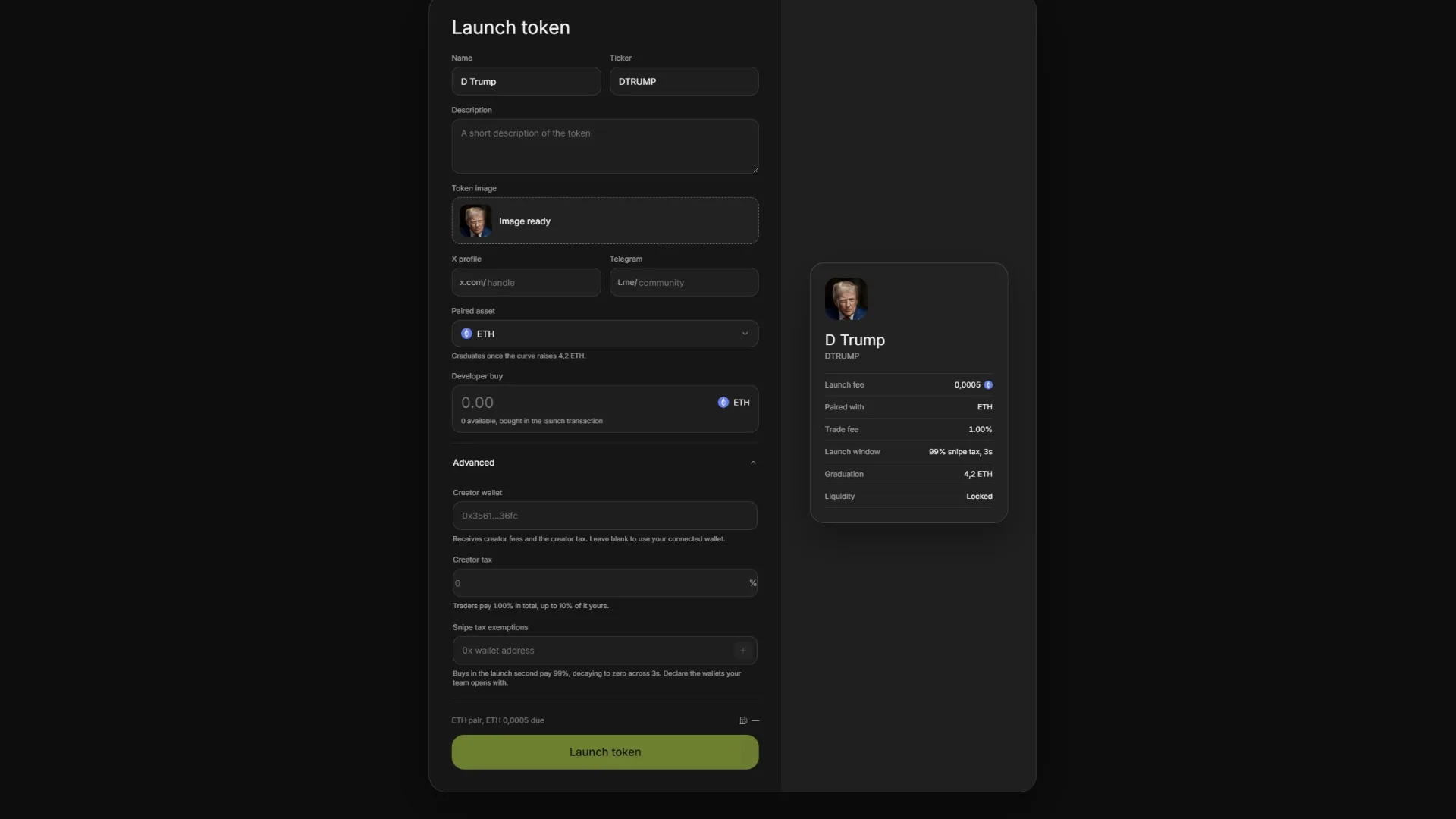
Here you can customize the token you’re about to create (give it a name, ticker, description, image, etc.), pick which asset to pair it with (usually ETH), and add advanced settings (like creator tax, or exempting the sniper tax for certain wallets). Step by step, here’s how you confirm your token launch on Pons:
- Fill in the customization fields: name, ticker, description, and image are the most important, since they’re the first thing anyone checks before buying.
- Add socials: an X profile and a Telegram community are the two fields available. The more info you add, the more trust future buyers will have.
- Set the pair: ETH is the most common and widely used, but you’re free to pick another token to back the one you’re about to create. Just keep in mind that using an alternative pair will make your token more volatile.
- Optional: Pons lets you set another wallet as the creator (dev) and specify a creator tax. That’s the fee percentage the creator earns whenever someone transacts with the token. You can also place a dev buy, but instead of that we recommend using a bundler.
- Click ‘Launch token’: this confirms the transaction in your wallet and the memecoin will show up on the Pons homepage as a tradable pair.
That’s how you launch a memecoin on Pons Launcher, but there are still challenges ahead if you want to go far. That’s why in this guide I don’t want you walking away with just the basics. I want you to actually understand how the Pons launchpad works and how to squeeze the most out of it while boosting the odds of graduating your token.
Alternative for launching a token on Pons Launcher: Bundler Tool
Yes, creating a token using the Pons launcher on Robinhood Chain was the easy part. Truth is, most devs launch more than one token per day trying to hit success, and they probably aren’t doing it straight from Pons. The reason is simple: snipers are always looking to dump as many tokens as they can.
That’s why Pons adds a fee tax to keep snipers out, but it isn’t enough. If you place a dev buy that’s too big, you’ll scare off the rest of the buyers, because you automatically become a top holder of your own token. Generally speaking, that’s a massive red flag, since you hold enough supply to dump everything and wipe out the other holders.
So, to reach the highest possible market cap and become a graduated token, you need to keep snipers away from your project without sending a counterproductive signal in the process. What’s left? Use a Pons bundler that lets you add more than one wallet to that initial buy. This way:
- You’ll dodge the negative sniper effect, because if they enter your token they’ll do it right after you, blocking them from doing whatever they want.
- You can include up to 20 wallets in the initial buy, instead of a single dev buy. That way you diversify the initial holdings, get several starting holders, and none of them looks like a threat to buyers coming in later.
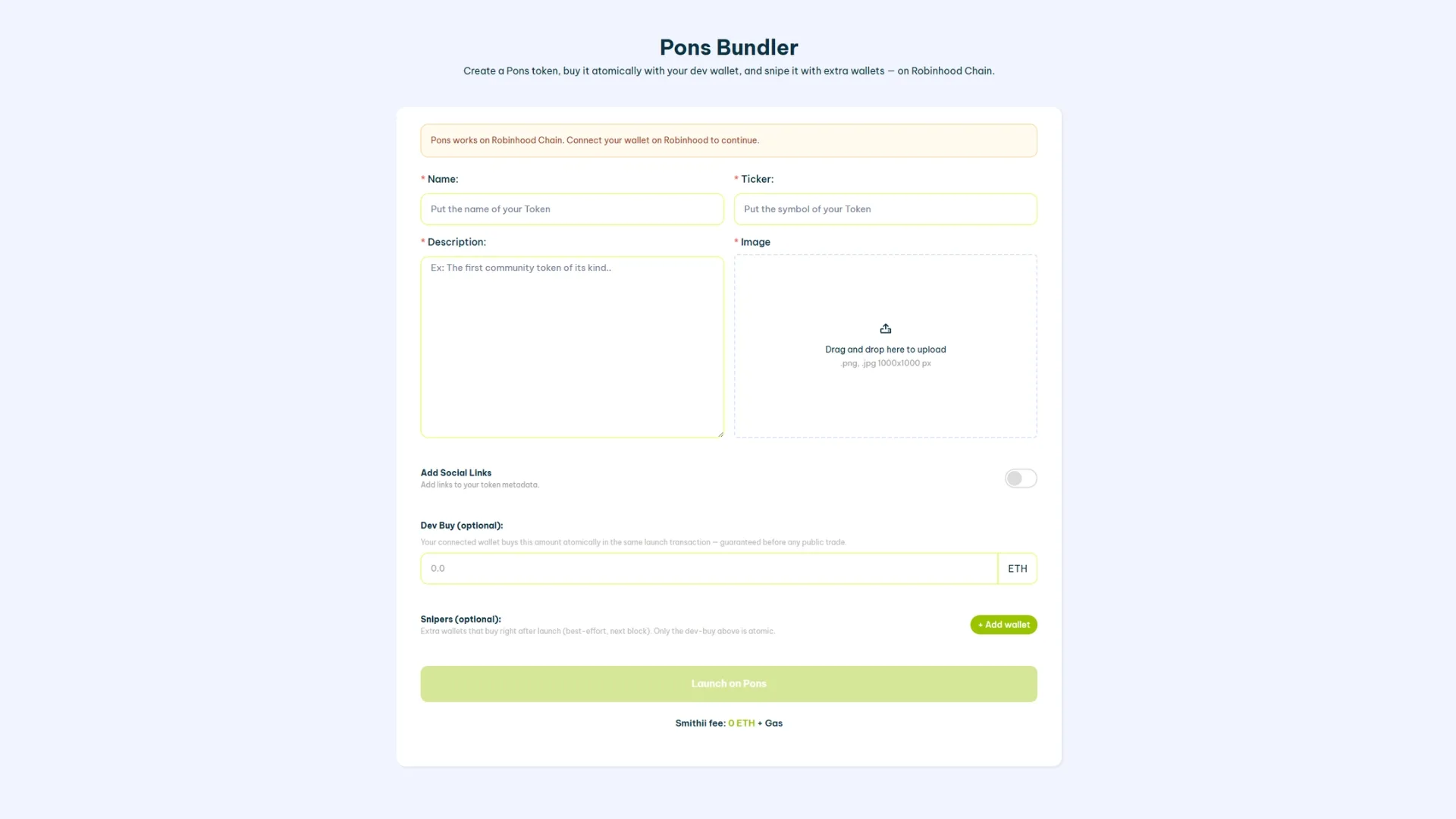
The process is basically the same one you followed earlier, but the difference is that now you can include up to 20 extra wallets in the initial buy.
Using the Pons Bundler built by Smithii costs 0.0085 ETH no matter how many wallets you add. Once you launch the token, it’ll appear on Pons as usual and can graduate if it clears the bonding curve. If you want to learn more about how the Pons Bundler works, we’ve got a guide explaining how to run an initial bundle.
Another hidden perk of the Pons bundler
When you’re making big initial buys, using a bundler is basically a must. By adding more wallets to that initial buy, you’re sending two signals:
- Your token was being anticipated by more people, which can boost its popularity.
- It shows up directly on the homepage with progress already on the graduation bar.
Seems obvious, but it’s genuinely another benefit of using the bundler bot when launching a memecoin on Pons, because you’ll be much closer to graduation from the very first moment. Sure, this depends on how big your initial buy was, but that instant distribution lifts the first bar on your token chart.
Post-launch tips to keep leveling up
From experience, I know plenty of devs who had to launch dozens of tokens before landing one that actually worked. If you settle for the idea that you’ve got the best concept for a memecoin or a token on the Robinhood network, it’s pretty much guaranteed you won’t get very far.
The key isn’t launching a token and trying to revive it even after a week of no activity. It’s about staying consistent and starting over when you need to. With every iteration you run, the better you’ll understand how to ride a trend and how to keep growing your exposure.
Alright, when you go to launch a token on the Pons launcher, keep these tips in mind.
Identity matters more than you think
When the Robinhood network first showed up, CashCat was the first memecoin to gain traction. Its identity wasn’t picked at random either; it’s a nod to the codename of the Robinhood Chain project before it became what we know today.
This isn’t just some random memecoin about a cat. It ties the ecosystem’s identity to a scoop that Tenev, Robinhood’s CEO (the investment platform, not the blockchain), would later validate. That single move was enough for CashCat to blow past $200 million in market cap.
So while we recommend launching several memecoins, the truth is you shouldn’t just throw anything out there. The more real meaning it carries, the easier it is for a community to identify with it, and once that happens, it’s only a matter of time before a wave of users finds you. Whether it’s for your originality or the essence of what it stands for.
Remember, the name, image, and ticker are the first thing anyone sees.
Sustaining traffic through the first hours (and first days)
After the initial buy, a token needs activity or it’ll be forgotten fast. The Pons homepage rewards tokens with constant activity, making them more discoverable and pulling in more people. If you don’t have followers jumping on your project, getting the organic traffic that validates you gets tough.
That’s why you should consider using a volume bot for Pons, a tool that generates buy and sell transactions in a sustained, safe, and organic-looking way. The right approach is to keep generated traffic supporting the real one, never replacing natural traffic with artificial traffic.
So after launching a token on the Pons launcher, you need to make sure it has activity to try to convince users who typically look at the token’s real activity. Without this, your coin will be forgotten right after launch and you’ll have to spin up a new project.
We have a dedicated guide showing you how to use the volume bot for Pons.
Buyback and burn tokens earned from creator taxes
As we explained in our buyback and burn guide, this play lets you take the funds you collect from taxes and reinvest them. It has two quick effects:
- Your token’s market cap goes up, because you’ll be buying with the fees you’re earning as the creator.
- The supply drops (only if you burn), pulling a chunk of tokens out of circulation and pushing the value up (if we’re talking large amounts).
Graduating your token is a goal, not the finish line
When the token graduates, liquidity moves over to Uniswap and gets folded into a massive pool, which in theory gives you wider exposure and lets more people reach your token without knowing Pons. It’s a big milestone, sure, but it’s not a guaranteed sign of success.
After launching a memecoin on the Pons launcher and hitting graduation, pulling in more buyers is still a very tough job. This is where you have to double down on your marketing strategy by hitting forums, social media, or finding ways to give the token real utility.
FAQ
How can I launch a token on the Pons launcher for Robinhood Chain?
You can do it two ways: directly from Pons, which lets you interact with their creation tool, tweak the dev wallet, set a creator tax, and make a dev buy right at launch. The other way is using the Smithii bundler bot, which lets you make an initial buy with up to 20 different wallets to lock snipers out.
Can I earn from creating a token on Pons?
Yes, the creator can set a dev tax collected on every transaction. You can also make an initial buy that you can use to reward other buyers through incentives, or to run a treasury with another wallet that lets you sell in tranches to fund the project.
What happens when a token graduates on Pons?
All funds raised in the bonding curve go into a liquidity pool on Uniswap. At that point, the lp tokens are automatically burned, so there’s no way anyone can pull those funds out. It’s an edge because anyone can create a token without funds, and Pons gets them listed on the biggest DEX on EVM.
What’s the key to a successful launch on Pons?
First off, there’s no single answer telling you exactly what to do to succeed when launching tokens on Pons. That said, there are a few practices that can give you a slight edge, but they’re not the reason for success on their own. Things you can improve include planning the token (giving it personality and authenticity racks up a lot of points), backing organic traffic with tools like the Smithii Volume Bot for Pons, running buyback & burn, and getting the token to graduate.
Conclusion
Now that you know how to launch a memecoin on the Pons launcher on Robinhood Chain, you’ve got everything you need to start creating your own tokens. There are no limits or barriers at this point, and no cap on how many times you can create a token. If you add a creator tax, you can pull in a solid amount of funds that give you more room to maneuver.
The real strength of creating a token is actually keeping it alive long enough to earn the attention it deserves. Building communities is one of the hardest things out there, and buyers today are pretty superstitious, so the fewer red flags you give off, the better.
That’s why we recommend using the Smithii Bundler Bot when launching, since you can split that initial buy across multiple wallets, protect yourself from snipers, and lock in a solid holder base from the very first moment.

Content creator and SEO contributor at Smithii. Systems Engineering student and crypto-tech enthusiast.