The Ultimate Ethereum Token Guide: ERC-20 and No-Code Tools

Follow our complete guide: from the standard and tokenomics to liquidity pools on Uniswap and airdrops.
Your ERC-20 token project on Ethereum, from start to finish
No prior knowledge required. We walk you through the entire process, from picking a wallet to getting your token listed on an exchange and bought by investors.

What you’ll find in this complete guide
- Getting ready to create an token ERC20 on Ethereum: from the initial idea to a solid plan.
- Creating the token on Ethereum: use tools that make the whole thing simple, no developer skills required.
- Pre-launch for your token ERC20: marketing strategies and tools to build hype and warm up future investors.
- Creating a liquidity pool on Uniswap: how to set up and manage a liquidity pool on Uniswap, plus strategies to run it.
- Post-launch and promotion for your token project on Ethereum: tactics to hold and grow the value of your token, including airdrops and listings on popular platforms.
Why Ethereum?
Since launching in 2015, Ethereum has reshaped the blockchain industry as the first network to offer solid support for digital assets like tokens and NFTs. Its token ERC20 standard made it easy to integrate across platforms, from wallets to decentralized exchanges, turning it into the blockchain with the most users. It’s a rock-solid foundation for building a token project.
Key tools for every phase of an ERC-20 token project
For every key step in launching an token ERC20 project, there’s a Smithii tool built to handle it. The main challenge on Ethereum and across the crypto ecosystem is that launching your project usually requires advanced programming skills to write a smart contract in Solidity, a language built specifically for Ethereum.
Most people interested in Web3 end up stuck as users instead of builders because the technical bar is too high. But the Smithii Tool Suite was built to strip down those complex flows, letting you create ERC20 tokens without writing a single line of code. We’ll walk you through the process and show you how to use each tool.

1. Prep work: wallet and tokenomics
Pick a wallet and plan your tokenomics
You’ll need a wallet, which is an address that lets you interact with digital assets on the blockchain. Creating one is free, fast, and simple, but you’ll have to pick which one to use. The most popular option is Metamask, and it’s a solid starting point if you don’t have one yet. Then, before creating your token, you’ll want to think through its economics carefully, what’s known as tokenomics.
What are tokenomics?
Tokenomics, a blend of ‘token‘ and ‘economics‘, refers to the economic model behind a token. It covers factors like creation, distribution, supply and demand, incentive mechanisms, and burn programs.
Solid tokenomics are key to your project’s success. They lay the foundation for long-term scalability and help bring investors on board.

Best alternatives to Metamask
Metamask is the most popular pick and a solid entry point into the crypto ecosystem, but these alternatives are worth a look.

How to design your tokenomics
Solid tokenomics can make or break a project on Ethereum. Use our tokenomics calculator and stop flying blind.
By the way, the face you see in the tokenomics image is Jorge, our CEO & Founder. We’re a fully doxxed team, and we know that quality and transparency are a real edge in the crypto ecosystem. That’s why thousands of people pick us every day.
On top of that, all our online tools are audited, fully secure, and backed by a 24/7/365 support team.
2. How ERC-20 tokens work on Ethereum
What is a token ERC20?
ERC20 stands for Ethereum Request for Comment, and 20 is its identifier. It’s the standard protocol for creating fungible tokens (transferable assets) on Ethereum and other EVM-compatible blockchains (Ethereum Virtual Machine), like Base or Polygon. These were built around the EVM’s parameters, but since they aren’t Ethereum’s mainnet, they’re known as Ethereum Layer 2 blockchains, and their tokens as ERC20 Layer 2 tokens.
An token ERC20 can represent a financial asset like Shiba Inu, a token on the Ethereum blockchain. The ERC20 standard has been massively adopted over the years, letting wallets, exchanges, and any Ethereum platform interact without friction because they all follow the same protocol.
What is an token ERC20 used for?
- Asset tokenization: ERC20 tokens let you convert physical assets, like real estate or artwork, into digital tokens, making them easier to trade and accessible to a wider pool of investors.
- Governance: distributing ERC20 tokens across a community can power governance by giving holders voting rights in Decentralized Autonomous Organizations (DAOs).
- Decentralized Finance (DeFi): ERC20 tokens unlock more advanced financial use cases, like representing a stake in a liquidity pool, since they’re transferable and can drive automated processes.
- Loyalty and rewards programs: ERC20 tokens help teams build loyalty and rewards programs for their community, driving engagement and customer retention. For example, they can be used to launch a airdrop on Ethereum without writing any code.
- Fundraising: ERC20 tokens are used as digital currency to raise funds through Initial Coin Offerings (ICOs).
- Memecoins: these are SPL tokens created mainly for humor or entertainment and tightly tied to degen culture, but sometimes they can reach serious value and build strong communities. One example is Shiba Inu, an iconic ethereum that keeps gaining traction year after year.
How much does it cost to create an token ERC20?
To create a token on Ethereum, you need to create a smart contract, basically code that lives on the blockchain and acts as the foundation for a specific digital asset, in this case a token. Behind the token there’s a smart contract, and building it requires programming knowledge.
Hiring a developer to create a smart contract can get expensive, usually more than 200 USD. That’s why the online solutions in Smithii’s tool suite make the crypto ecosystem more accessible, letting anyone create their own token without any coding skills for just 35 USD (0.03 ETH).
Basically, the dApp we’re going to use is called Ethereum Token Creator. It works as a smart contract generator and using it costs just 0.03 ETH.

Create a token ERC20 on Ethereum
Whatever your project looks like, you’ll need to start by creating a token ERC20 so you have your token live on the Ethereum blockchain. Check out this guide to get it done easily.

How to create a memecoin on Ethereum
Even if it’s a token ERC20, you still need to understand certain specifics, like its nature and the key details that matter when it comes to successfully launching a memecoin on Ethereum.
Whichever option you go with, you’ll end up with your token ERC20 or memecoin Ethereum created and sitting in your wallet.
What you need to know about meme coins on Ethereum
Marketing is inseparable from launching a memecoin. At the end of the day, that’s the whole point: to be a meme. From a marketing standpoint, we need to understand what moves the market (the hype) and which platforms people actually use.
Looking at the hard data and successful ERC20 meme coin case studies, most tokens with solid promotion and stronger performance tend to lean on influencer campaigns and get pushed inside DAOs by Alpha Callers.
Other high-value marketing plays include communities and social platforms like X, Telegram, and Discord. Standing up a dedicated website for the project is also highly recommended.
A meme coin on Ethereum is an ERC-20 token
Yep. Meme coins were born as a parody or a jab at speculation in the crypto market. Over time, some of these coins have moved past their humorous roots, building holder communities and developing real use cases within the crypto ecosystem, like blockchain gaming, NFTs, and crowdfunding.
That said, when we talk about creating a Meme Coin on ETH, we’re talking about the exact same process as creating any token ERC20. The only difference is the humorous angle of the meme token.

3. Prelaunch of the token ERC20
What to consider before opening a liquidity pool
Creating a Liquidity Pool on a decentralized exchange (DEX) is the end goal, but there are several strategic plays worth planning to build hype around your token. Community building is key here, on platforms like X (Twitter), Discord, and Telegram. You can also get visibility for your token on channels like YouTube, run paid campaigns, work with ambassadors on X, do collabs with YouTube influencers, publish articles on relevant crypto sites, and much more. The playbook doesn’t run out easily.
The end goal is to generate interest in your token and create buy pressure when you launch it on the liquidity pool.
Above we covered off-chain strategies, but you also have on-chain tools to help promote your token. In this case, dApps like Ethereum Multisender for airdrops are especially useful.
Marketing for Ethereum tokens
To give any token launched on Ethereum a real shot, you have to think it through and plan a solid marketing strategy.
This is the right approach, for real. At this stage you need to reach as many people as possible to grow the initial capital behind your token. That’s how you start pulling in potential investors.
With Ethereum meme coins, the standard play is to build the community first and launch the presale after, though your approach can vary depending on the type of project you’re building.
Know your audience
Knowing your audience is essential. Ethereum investors typically look for projects that are innovative, transparent, and have strong upside potential. You have to make the unique value and benefits of your project crystal clear if you want to earn their attention.
Use the right platforms
Three platforms dominate the crypto world:
- Telegram: the go-to for real-time chat and building an active community. Spin up a Telegram channel to talk directly with investors, answer their questions, and push updates consistently.
- Discord: perfect for building a solid community with topic-based channels. Run AMAs (Ask Me Anything) and drive deeper conversations around your project.
- Twitter: great for shipping quick updates, reaching a wider audience, and sharing news inside your niche.
Transparency and building trust
Transparency is key when marketing a presale. Plenty of projects tell the community upfront how they plan to distribute the token supply. We call this Token allocation, and it usually shows up in the tokenomics.

If you don’t have a detailed plan for how you’ll use the presale funds, at least be clear with the public about how much will go toward creating the Liquidity Pool on Ethereum and how much will fund other activities.
After that, keep investors in the loop with regular reports on project progress. Transparency builds trust and credibility around your project.
Influencer collaborations
Teaming up with well-known influencers inside the Ethereum community can seriously boost your project’s visibility and credibility. Look for influencers with a solid reputation and real credibility in the Ethereum ecosystem to shill your presale.
Airdrops and reward programs
Use airdrops and reward programs to drive participation and loyalty. Most tokens hit an initial spike at launch and never touch it again because they don’t have a community backing them.
How ERC-20 token airdrops work on Ethereum
As we’ve already covered, beyond the marketing work around your project, a airdrop on Ethereum is a way to promote your token ERC20 or meme coin:

How to run a snapshot on Ethereum
Find the wallets holding a specific token that are likely the right audience for yours.

How to use Ethereum Multisender
Push your token out to multiple wallets at once to gain visibility. Users can search for it, and that usually sparks buying interest.

Add a logo to an ERC-20 token
It’s worth adding a logo, links, and the key info to your token so it has a clear identity and brand presence. Learn how to do it in just a few steps.

4. Liquidity pools on Uniswap
How a liquidity pool works for an ERC-20 token
A liquidity pool hosted on a decentralized exchange like Uniswap, the most widely used one across the Ethereum ecosystem. Uniswap is a decentralized exchange (DEX) built on EVM standards (Ethereum Virtual Machine), so you can spin up a liquidity pool for any token ERC20.
Once a token is live in a liquidity pool on a DEX, anyone can buy and sell it.
Liquidity pools on Uniswap with Smithii
A liquidity pool is a capital pool set up by a token’s developers so users can buy and sell that token at any time.
This liquidity pool is configured with a token pair, combining the token in question with another token that already has solid value (like $USDC or $ETH). These pairs are deposited into a DeFi platform, such as Uniswap, to enable swaps.
That way, anyone can buy tokens from this liquidity pool by depositing another token with established value into it. In the same way, anyone can sell tokens by depositing them into the liquidity pool and receiving another token with established value in return.

How to create a liquidity pool on Uniswap
Pair your token with a value-backed token (ETH or USDC), create the liquidity pool and list it on Uniswap in just a few steps. No hassle and no coding required.
What you need to know about liquidity pools on Uniswap
To wrap up, let’s go through some of the most common questions that come up when you’re thinking about creating a liquidity pool:
Can I create my own liquidity pool on Uniswap?
Yes, you can create your own liquidity pool on decentralized exchanges (DEX) like Uniswap for ERC20 and ERC20 layer 2; Raydium for Solana; or PancakeSwap for BSC. A liquidity pool lets you deposit tokens into a smart contract, making it possible for other users to trade against them. Creating a liquidity pool is straightforward and requires no coding knowledge, though having some background in decentralized finance (DeFi) definitely helps.
How much does it cost to create a liquidity pool on Uniswap?
The cost of creating a liquidity pool depends on the platform you use and the blockchain it runs on. In most cases, you’ll pay gas fees to deploy the smart contract and add liquidity. This can range from a few dollars to several hundred, depending on network congestion. You’ll also need an initial token allocation to fund the pool.
How do you create a liquidity pool smart contract?
If you know how to code, you can build a custom smart contract for a liquidity pool using a language like Solidity for Ethereum-based projects. That said, most users rely on existing DEX platforms with built-in tools to create liquidity pools without writing any code. An even cleaner option is to use audited platforms like Smithii, which offer online tools with an intuitive interface that makes creating your Liquidity Pool much easier.
Bots and whales: what you need to know about liquidity pools on Ethereum
One of the most important things to watch out for when you launch a new liquidity pool on Ethereum are sniper bots and whales. If you don’t take precautions, they can drain your liquidity (what’s known as a token exploit) and wreck the project you’ve worked so hard on. Here’s what you need to know:

Understand bots and whales on Ethereum
Get a clear picture of how sniper bots work on Ethereum and how whales behave, so you can make decisions that mark the difference between a project’s success and failure.

Types of bots on Ethereum
Discover how the complex world of Ethereum bots works and why it’s key to factor it in when planning your liquidity pool launch and deciding how to react.
Now that you’ve got the basics on bots and whales on Ethereum down, take a look at the online tools Smithii puts at your disposal to strengthen your position against automated bot threats and whale firepower:

Anti-bot mechanisms on Ethereum
How to stop snipe and bot trading on your token inside Uniswap’s liquidity pool. If you’re done dealing with bots, or just want to keep their activity in check, here’s what you need to know.

Anti-whale mechanism for Ethereum
Learn how to prevent pump and dump on your token ERC20 on Ethereum by managing large holders, or whales, who can move the market price around.

5. Post-launch promotion for your Token project on Ethereum
Promote my liquidity pool on Ethereum
At this stage, you need to double down on the marketing moves you ran during the pre-launch, like keeping the airdrops going. You’ve also got some extra plays available, such as listing your Liquidity Pool on Coinmarketcap and Coingecko, two platforms where thousands of users can discover your token.

Why run token airdrops
We break down the key points about airdrops in this guide, so you understand how they work and can use them as effectively as possible.

How to list your token on CoinMarketCap
Follow this guide to list your token or memecoin Ethereum on CoinMarketCap.

How to list your token on CoinGecko
In this article we show you how to list your ERC20, token or memecoin on CoinGecko.
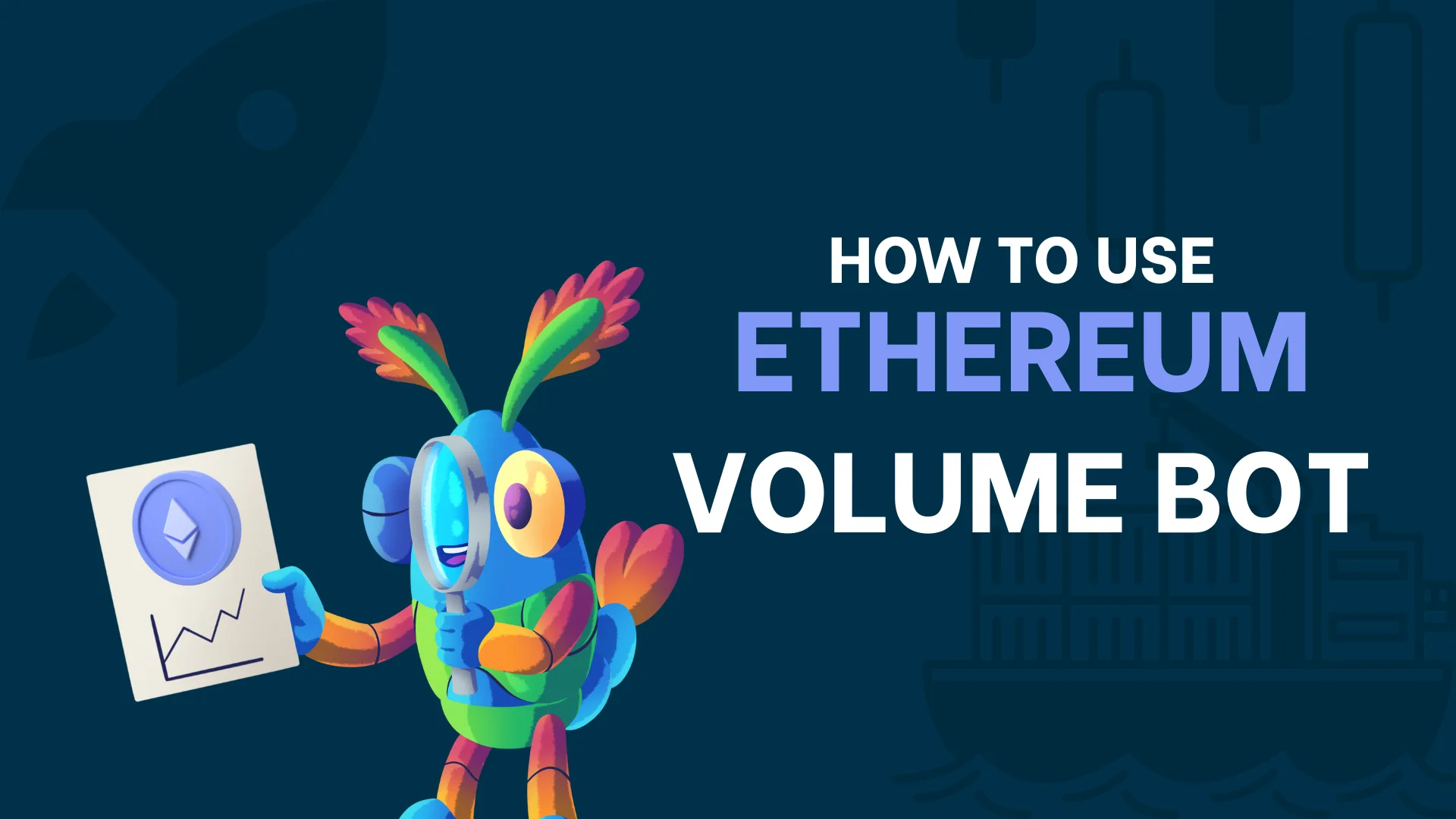
Ethereum Volume Bot: quick guide
A complete guide to using the Volume Bot Ethereum and giving your token ERC20 a boost without writing a single line of code.

Key takeaways from this ERC-20 token guide
Your ERC-20 token project, ready for takeoff
Congrats on making it to the end of this guide! You’ve got everything you need to create and deploy your token ERC20 or meme coin on Ethereum. You’ve learned why planning matters, how to build your token without technical headaches, and the key strategies behind a successful launch.
Along the way, you’ve seen guides covering online tools for different launch needs, from creating the token to its liquidity pool. All of these dApp are available in the smithii tool suite, and we built them so anyone with zero prior experience can be part of the blockchain ecosystem, not just as a spectator or investor, but as the owner of their own project.
Why use Smithii tools
- Simple, intuitive interface.
- Low costs.
- Use each online tool independently, no signup required.
- A complete toolkit to manage everything from one place.
- Step-by-step guides and video tutorials.
- Fully doxxed team.
- 24/7/365 support. Check out our reviews.
Become another Smithii Chad
You’ve made it this far. You may have already used one of our online tools, so all that’s left is to invite you to join our community on X, Telegram, Discord, or our Newsletter. You’ll find the links in the page footer.
We’re constantly expanding and keeping up with everything new in the crypto ecosystem, so don’t miss a thing.