








How to Create a OpenBook Market ID on Solana: A Guide for Project Creators
A OpenBook Market ID on Solana is the token pair you need to register on-chain before you can launch a liquidity pool on a DEX like Raydium. No Market ID means no pool, and no way for traders to buy or sell your token.
In this guide you’ll see exactly what a OpenBook Market is, how much it costs to create one (from 0.4 SOL up to 2.8 SOL depending on the size you pick), what the risks are if you go with the cheapest option, and the steps to set it up with no coding in about 1 minute.
If you’d rather watch the video version, the full tutorial is right below.
What Is a Openbook Market
Before we get into the creation process, we need to understand what a OpenBook Market ID actually is and how it works, so we can set it up the right way and get the most out of our Solana.
A OpenBook Market or Market ID is basically creating a “market” where a token pair can be traded. In other words, the Market is what’s known as a “Token Pair” on Solana.
This market takes up space on the blockchain that allows transactions for that token pair to be processed. The size of that market determines how many transactions it can handle at any given moment, and that depends on how much we invest when creating it.
If we add liquidity to this token pair on any DEX like Raydium, users will be able to swap freely thanks to the Liquidity Pool.
How to Create a OpenBook Market ID on Solana: Step by Step
The Market size (its «length» in bytes) determines the cost and how many simultaneous transactions it can handle. The three standard sizes are 0.4 SOL, 1.5 SOL, and 2.8 SOL; we break down the trade-offs of each one further down.
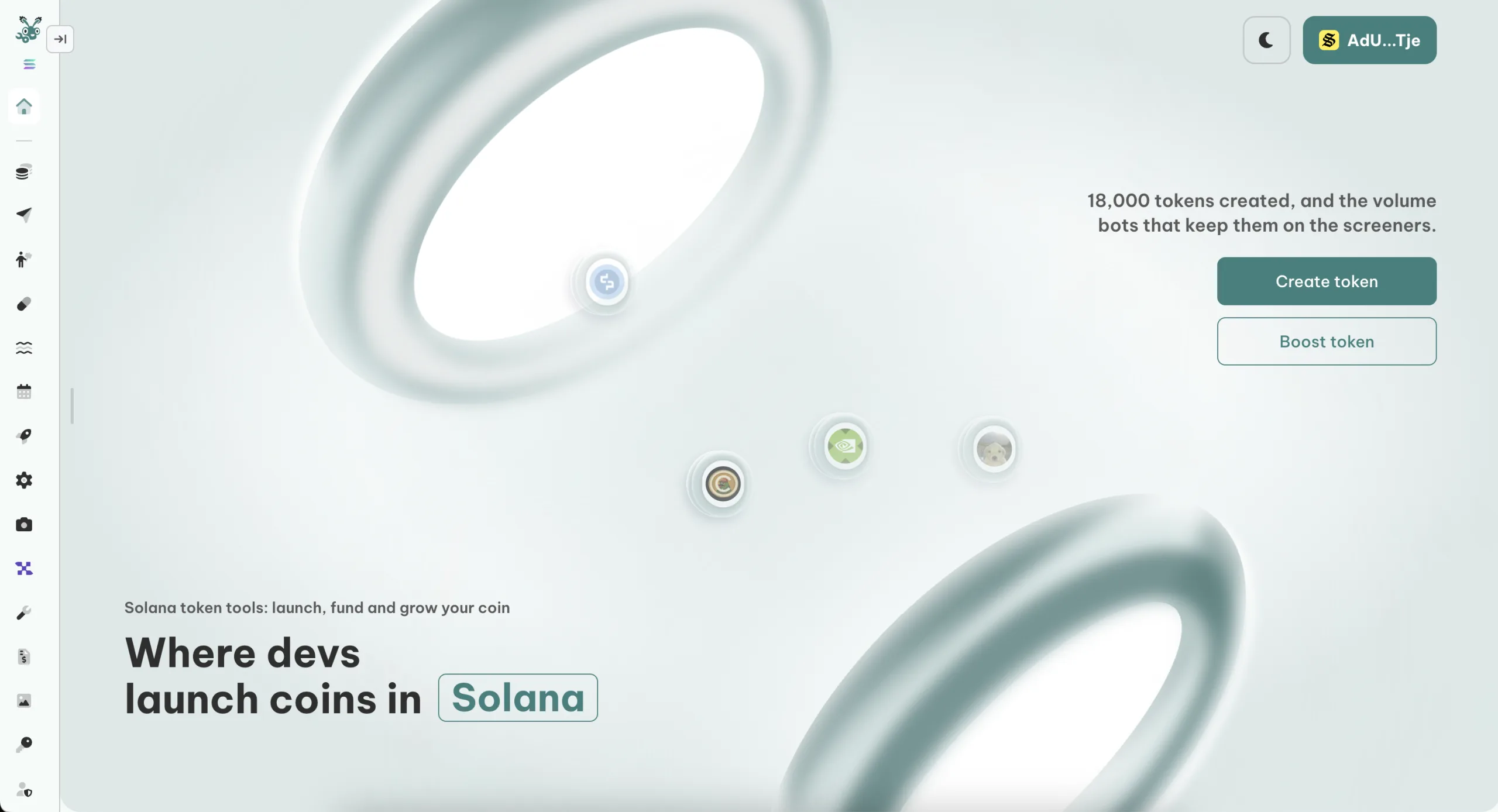
For the creation flow we’re using the Solana OpenBook Market Creator by Smithii, a no-code tool that lets you create and customize a Market ID in about 1 minute. Here’s what the interface looks like:

- Open the Solana OpenBook Market Creator.
- Connect your wallet to start using the tool
- Select the “Base Token“. The token you’ve created that doesn’t have any value yet.
- Select the “Quote Token“. A token that has market value. Usually SOL or USDC.
- Set the “Minimum Order Size“. This is the smallest amount of your Token that users will be able to buy.
- Set the “Price Tick“. This is the smallest amount the price of your Token can move.
- Open the advanced options (only if you want to use a market smaller than 2.8 SOL).
These are the “inputs” you need to set for the different price tiers of your Market ID.
0.4 SOL:
- Event Queue Length: 128
- Request Queue Length: 63
- Orderbook Length: 201
1.5 SOL:
- Event Queue Length: 1400
- Request Queue Length: 63
- Orderbook Length: 450
2.8 SOL:
- Event Queue Length: 2978
- Request Queue Length: 63
- Orderbook Length: 909
Keep in mind that you can use other values too, but these are the “standard” ones. The protocols recommend the last one, 2.8 SOL.
Parameter guide for Minimum Order Size and Tick Size on the OpenBook Market ID:

To wrap up the process, click Create Market and approve the transactions.
Once creation is done, you’ll see the Market ID. Copy it and save it, since you’ll need it to add liquidity on any DEX.
The most common one is Raydium, and right now the cost of adding liquidity is 0.6 SOL.
If you want to dig deeper into the Minimum Order Size and Tick Size of the OpenBook Market ID on Solana, here’s a more complete video guide.
How much does it cost to create an Openbook Market on Solana?
The cost of creating an OpenBook Market on Solana depends on its size. That size affects how many transactions the market can handle.
In theory, the “optimal” size would cost us around 2.7-3 SOL. But the reality is that you can spin up a Market for less than 0.5 SOL.
In this post I’m going to show you how to do it for 0.4 SOL, but first we need to go over the risks.
Aquí te explicamos cómo crear Pool de Liquidez para tu Token en Solana.
Risks of picking a cheaper Market
It’s great to create our OpenBook Market for 5x less than what we’d normally pay, but we can’t ignore the issues that can pop up under certain conditions.
If you can afford it, you should always go with the “optimal” market. I’ll walk you through both options later on.
Based on experiences shared with us, we’ve seen tokens hit 500k USD Marketcap on a “cheap” Market without any issues.
If you’re planning to launch a “serious” project rather than a memecoin, I wouldn’t recommend cutting corners on costs.
Either way, if you’re going with the cheaper option, it’s worth setting a higher-than-usual “minimum order size“, so micro-transactions don’t eat up space in the OpenBook Market.
In short, the main risk is that our token gets a lot of transactions and a percentage of them fail because the market can’t process them.
Is it safe to create my Openbook Market ID on Solana?
We’re a company based in Dubai with thousands of active monthly users across our tools. We interact with the SPL (Solana Program Library) following every standard while offering a friendly interface for people with no coding background. The tool then creates an OpenBook Market acting as the middleman between you and the Solana library. In other words, it only handles the protocol calls needed to create the OpenBook Market.
On top of that, the tool never asks for access to private keys, NFTs, or existing tokens in the wallet you’re using, so it’s clearly safe to use.
FAQ about OpenBook Market on Solana
What happens if I pick the cheapest Market (0.4 SOL)?
The Market still works normally for low and medium volumes (we’ve seen tokens with 500k USD market cap trading without issues on 0.4 SOL Markets). The risk shows up when there are spikes of simultaneous transactions that exceed the Event Queue capacity (128 slots on the low size): a percentage can fail. For serious projects, the 2.8 SOL size is the recommended one.
Do I need an OpenBook Market to list my token on Raydium?
Yes. Raydium uses OpenBook Market IDs as the foundation for its liquidity pools. Without a Market ID you can’t create the pool on Raydium or on most Solana DEXs that share the same architecture.
Can I change the Market ID after creating it?
No. Once the Market ID is created, it’s locked on-chain. If you mess up the size or the parameters, you have to create a new one and ditch the old one (losing the SOL from the first). That’s why it pays to be clear on the Minimum Order Size, the Price Tick, and the target size before hitting Create Market.
Why do you have to pay SOL to create a Market?
The SOL isn’t a fee: it’s the rent that Solana charges for reserving the on-chain space the Market needs to process its transactions. The more space reserved, the higher the rent and the higher the capacity. The SOL stays locked in the Market account for as long as it exists.
What’s the difference between an OpenBook Market and liquidity pool?
The Market is the on-chain “container” for the token pair (what trades against what and under which rules). The liquidity pool is the capital you put into that pair so traders can buy and sell. First you create the Market, then you add liquidity on top of it.
Summary
Here’s a visual recap so you don’t leave without knowing everything about how to create an OpenBook Market.

Conclusion
Creating an OpenBook Market is a necessary step, even if they’re expensive. If we can save a few Solana to launch another memecoin, we should take advantage of it.
Thanks for reading, and remember to subscribe to our newsletter for weekly content built for Web3 Creators.
Don’t launch your liquidity pool without knowing this!
Get the 5 secrets behind how the big players launch a liquidity pool


Crypto writer focused on the Web3 space. Former contributor to the Smithii editorial team.